

July is Bebe Moore Campbell National Minority Mental Health Awareness Month, and for parents of teenage boys of color, it carries a message that cannot wait: boys in minority communities face some of the fastest-growing mental health risks in the country and some of the lowest treatment rates, and the earlier a family acts, the better a boy’s chances of full recovery.
Key Takeaways
Suicide attempts among Black adolescents rose 73 percent between 1991 and 2017, according to research published in Pediatrics, even as rates fell for white youth. Black children under 13 are roughly twice as likely to die by suicide as white children, and Indigenous youth face the highest suicide rates of any group. Only about 31 percent of Black adults with a mental illness receive treatment in a given year, compared with roughly 48 percent of white adults, a gap that shapes whether their children ever get help. Boys of any background tend to mask depression and anxiety as anger, irritability, or withdrawal, and cultural stigma around male vulnerability can make those signals even harder to spot. Effective treatment exists, and culturally responsive, boy-specific care improves the odds that a struggling teen actually engages with it.
Why July Matters
In 2008, Congress designated July as National Minority Mental Health Awareness Month in honor of Bebe Moore Campbell, the bestselling author and NAMI co-founder who spent her life fighting for families of color navigating mental illness without adequate support. Nearly two decades later, the disparities she named are still with us.
The CDC’s most recent Youth Risk Behavior Survey found that high school students who experienced racism reported higher rates of poor mental health, suicide risk, and substance use than students who did not. The same survey found that while overall attempted suicide rates among Black students improved between 2021 and 2023, falling from 14 percent to 10 percent, Black students still attempted suicide at a higher rate than their white classmates.
Behind every one of those percentages is a boy who probably never told anyone how bad it had gotten.
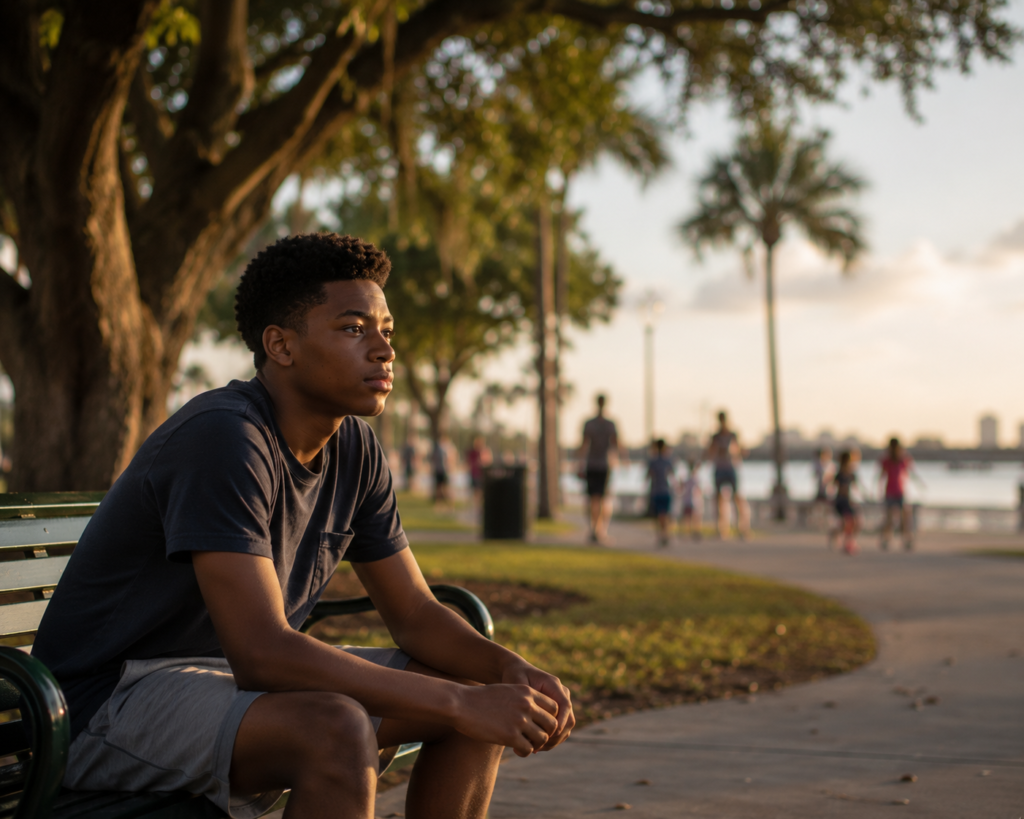
The Double Silence of Boys of Color
At Braveminds Academy, we treat adolescent boys ages 11 to 17, and one pattern shows up across every background: boys are taught, early and often, that pain is something to hide. For boys of color, that pressure is frequently compounded.
“Boys of color are carrying a double burden,” explains Travis Atchison, PhD, LCSW-QS, MCAP, Clinical Director at Braveminds Academy. “They face the same pressure every teenage boy feels to hide pain and tough it out, and on top of that, many are navigating discrimination, community stress, and a healthcare system that has historically not served their families well. When a boy finally shows us something is wrong, it usually looks like anger, withdrawal, or falling grades. If we only respond to the behavior and miss the pain underneath it, we lose him.”
This is why depression in teen boys is so often misdiagnosed as a discipline problem. A boy who stops turning in homework, snaps at his parents, quits the team, or gets in fights may be showing the male face of depression. Research consistently shows that irritability, aggression, and risk-taking are common presentations of depression in adolescent males, in contrast to the sadness and tearfulness adults expect to see.
Add cultural stigma into the mix, in families where mental health has never been discussed, where therapy is viewed with suspicion earned through generations of medical mistreatment, or where a son’s struggles feel like a reflection on the family, and the silence deepens. The boy does not talk. The family does not ask. The window for early intervention narrows.
Warning Signs Parents Should Not Dismiss
Every teenager has hard days. What separates normal adolescence from a developing mental health condition is persistence, intensity, and change. Parents should pay close attention when a son shows a lasting shift lasting two weeks or more: withdrawal from friends and activities he used to love, a significant drop in grades, changes in sleep or appetite, increased anger or irritability that feels out of proportion, reckless behavior or substance use, statements of hopelessness or worthlessness, giving away possessions, or any talk of death or suicide, even framed as a joke.
If your son expresses thoughts of suicide or self-harm, treat it as an emergency. Call or text 988 to reach the Suicide & Crisis Lifeline, available free and confidentially 24 hours a day, or go to the nearest emergency room.
What Culturally Responsive Care Looks Like
Getting a reluctant teenage boy into treatment is hard. Keeping him engaged is harder, and that is where culturally responsive care makes the difference. It means clinicians who understand that a boy’s guardedness may be protective, not oppositional. It means treatment that respects a family’s values and faith rather than dismissing them. It means recognizing that experiences of discrimination are real stressors with measurable mental health consequences, as the CDC data confirms, and addressing them directly in therapy rather than pretending they do not exist.
It also means recognizing how boys heal. At Braveminds Academy, our program is built exclusively for adolescent boys because boys engage differently in treatment: often through action, structure, shared activity, and earned trust rather than immediate face-to-face vulnerability. Evidence-based therapies, psychiatric care overseen by our medical team, continued academics, and intensive family involvement work together so that the progress a boy makes in residential treatment holds when he comes home.
“Awareness months only matter if they move a family from worry to action,” says Alex Williams, MSW, Executive Director of Braveminds Academy. “Your son’s pain is real, it is treatable, and asking for help is an act of strength, not a mark against your family.”
What Families Can Do This July
Start the conversation, even if it feels awkward. Ask your son directly how he is doing, listen without fixing, and come back to it again in a few days. Normalize help-seeking by talking about mental health the way you talk about physical health. If your family’s culture carries stigma around therapy, acknowledge it honestly and talk about why this generation can choose differently. If you have concerns, start with your pediatrician or a licensed therapist, and if your son’s struggles are severe, persistent, or unsafe, ask about higher levels of care. Residential treatment exists precisely for the boys whom weekly therapy alone cannot reach.

Dr. W. Nate Upshaw is a psychiatrist with over 20 years of experience across inpatient psychiatry, VA hospitals, academic medicine, and private practice. A Tulane University School of Medicine graduate and former University of South Florida faculty member, he specializes in complex and treatment-resistant conditions, including PTSD, depression. He is also trained in advanced interventional treatments such as TMS, ECT, and Spravato®, and currently serves as Medical Director at Braveminds Academy as well as Turnwell Mental Health of Charleston and Tampa Bay, focusing on personalized, high-precision psychiatric care.