
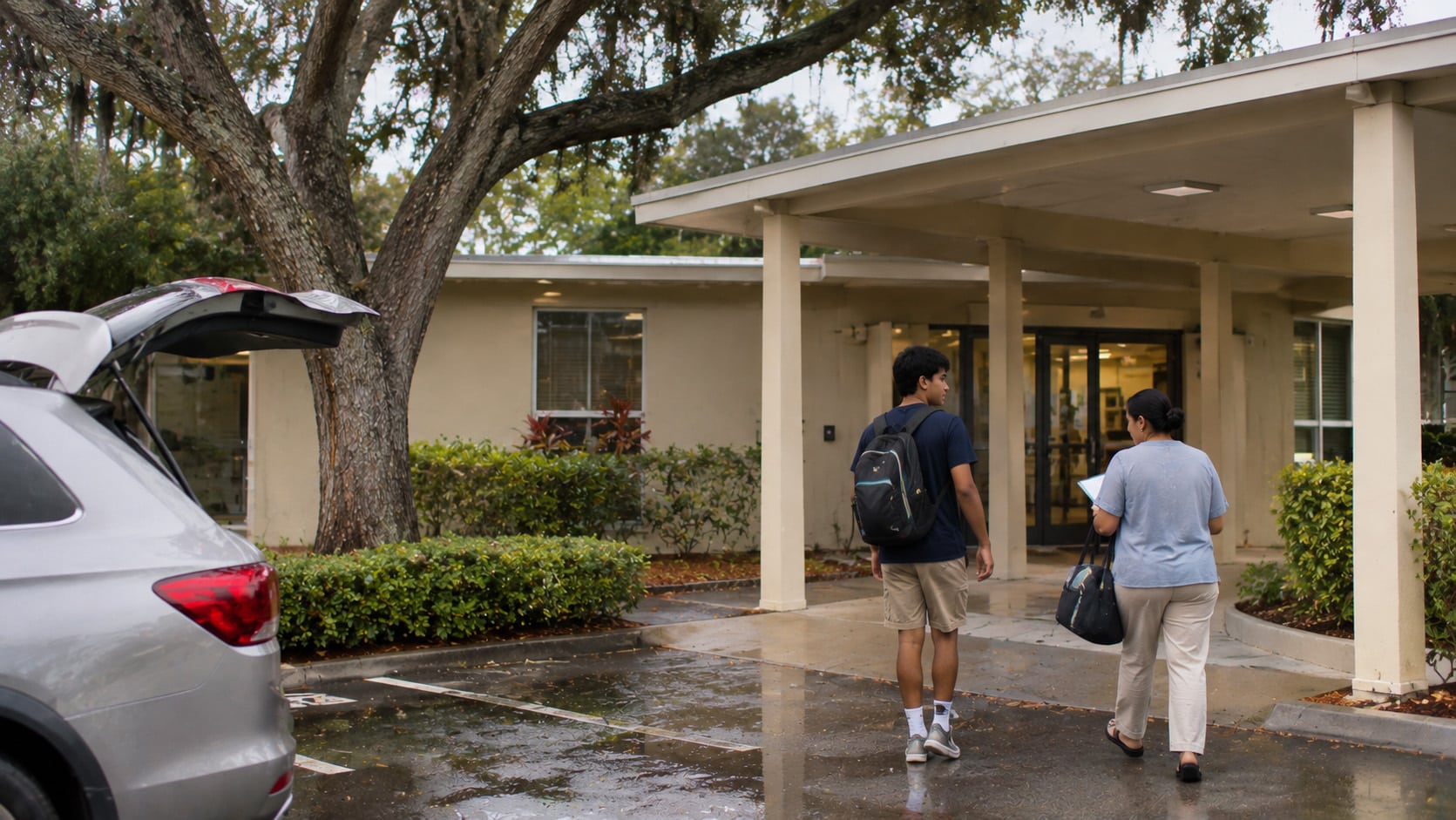
What to expect in teen residential treatment comes down to a clear sequence: a benefits check and clinical assessment before admission, an individualized treatment plan, a structured daily routine with therapy and school support, regular family involvement, ongoing progress reviews, and a planned step-down when he goes home. At Braveminds Academy, stays generally run 30 to 90 days, adjusted to each teen’s needs. Knowing the steps ahead of time makes a hard decision less frightening.
Key Takeaways
- Residential treatment begins with an assessment and an individualized plan, not a one-size-fits-all schedule.
- Days are structured, with 24/7 supervision, therapy, school support, and life-skills work built in.
- Families are part of treatment through regular communication with the clinical team and family therapy.
- Length of stay depends on clinical progress, and discharge planning starts early.
- Every program differs, so ask about the details that matter to your family, such as visiting and phone policies.
What Parents Are Worried About
- “Will he be safe, and who is watching him?”
- “Will he hate me for this?”
- “How will I know how he is doing?”
- “What happens with school?”
- “How long will he be gone, and what happens after?”
The steps below answer those questions in the order they usually come up.
 Step 1: Before Admission
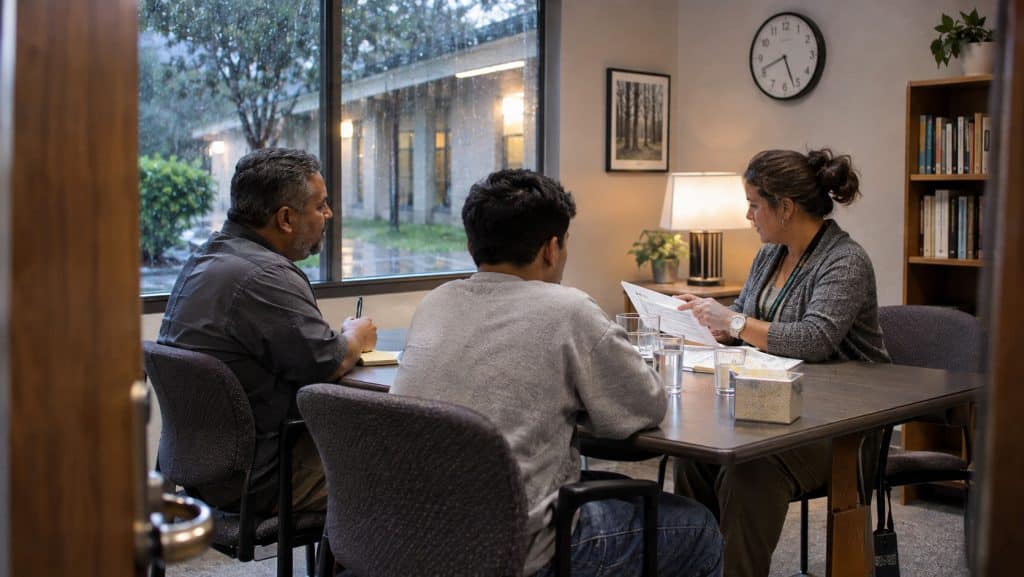
The process usually starts with a call to the admissions team and a conversation about what has been happening, what has been tried, and what the family hopes for. The program also verifies insurance benefits at this stage. Braveminds Academy offers insurance verification at this stage. See How Does Insurance Coordination Work for Teen Residential Treatment? for how that process works.
Gathering records ahead of time, such as past therapy notes, medication lists, hospital or school reports, and a summary of what has been tried, helps the clinical team prepare.
Step 2: Admission and Assessment
On arrival, a clinical assessment looks at his symptoms, history, safety, and needs. From this, the team builds an individualized treatment plan with goals for the stay. Braveminds Academy serves adolescent boys ages 11 to 17, and its plans are tailored after this admission assessment.
Step 3: The First Days
The first days focus on settling in. He learns the routine, meets the team, and begins to feel safe in a new place. Teens are supervised 24 hours a day, seven days a week. It is normal for a boy to feel anxious, angry, or homesick early on, and it is normal for parents to feel the same way. This is expected, and the team can help you both through it.
Step 4: Daily Life and Treatment
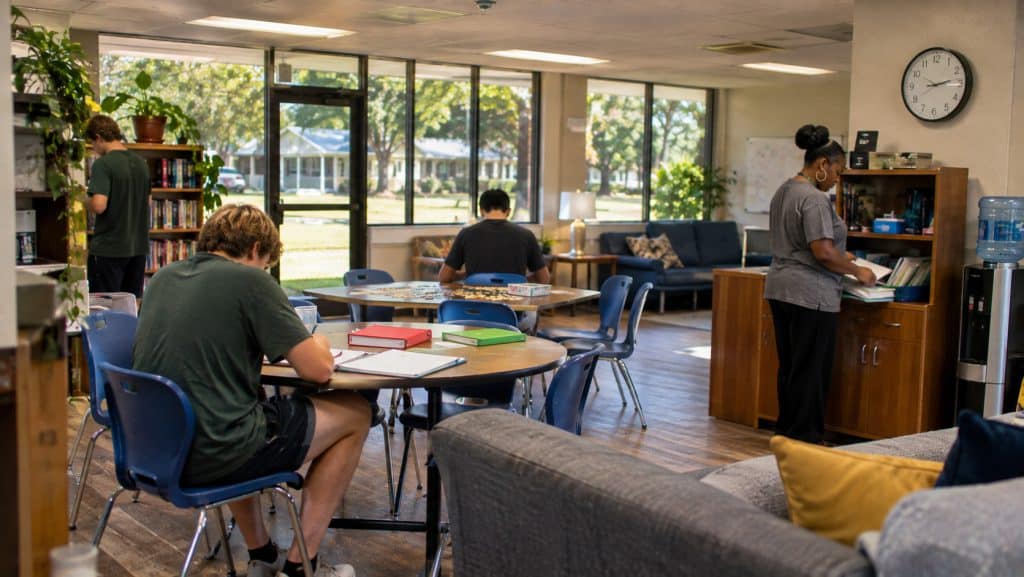
A residential day is structured, with predictable routines that give a teen who has been struggling a sense of stability. At Braveminds Academy, treatment includes:
- Individual therapy: described by the program as three to five sessions per week
- Group therapy: to practice skills and build peer connection
- Family therapy: built into the program
- Evidence-based approaches: including dialectical behavior therapy (DBT), cognitive behavioral therapy (CBT), mindfulness, and trauma-informed care
- Psychiatric support: when needed, led by the medical director, Dr. Nate Upshaw, MD
- Academic support and life-skills work
Step 5: Staying Connected as a Family
Teens do better when change reaches the family, not just the teen. Strong programs keep parents informed through regular communication with the clinical team and include family therapy in the treatment plan. See Family Involvement at Braveminds Academy.
Each program has its own policies on phone calls, video calls, and visits. Ask about these before admission so there are no surprises.
Step 6: School During Treatment
Falling behind is a common worry. Programs handle school differently, so ask how credits are tracked, who coordinates with the home school, and what the plan is for returning. Braveminds Academy includes academic support and coordination as part of treatment. For a closer look at what to ask, read How Do the Best Teen Residential Programs Combine School and Structured Living?
Step 7: Progress Reviews and Length of Stay
The team reviews progress regularly and adjusts the plan. Stays at Braveminds Academy generally range from 30 to 90 days depending on the teen, and the insurer also conducts its own reviews. A stay should be based on clinical progress, not a fixed calendar.
Step 8: Discharge and Step-Down
Discharge planning should start early, not in the last week. A good plan includes follow-up with an outpatient therapist, psychiatric follow-up if needed, a plan for school, and a plan for what the family does if symptoms return. Braveminds Academy includes step-down planning and aftercare coordination, and teens typically move on to outpatient therapy or an intensive outpatient program (IOP). Ask for the plan in writing before admission.
What Should I Do Now?
- Gather records. Pull together therapy notes, medication history, school reports, and any hospital records.
- Verify insurance. Use the insurance verification form to find out what your plan may cover.
- Ask your questions. Use the list below and write down the answers.
- Prepare your son. Be honest and calm. Explain that the goal is to help him feel better and that you are doing this because you love him, not to punish him.
- Plan for the rest of the family. Siblings and other caregivers have feelings too. Decide who will communicate with the team and how you will stay in touch.
 Questions to Ask Any Program
- What does a typical day look like?
- How many therapy sessions will he have each week, and what kinds?
- Who is on the clinical team, and who oversees medication?
- How often will we hear about his progress, and from whom?
- What are the policies on calls, video calls, and visits?
- How is school handled, and how do credits transfer?
- How is length of stay decided, and what does discharge planning look like?
- What licenses does the program hold, and can I verify them?
When Residential Treatment May Be Appropriate
Residential treatment is generally considered when symptoms are severe, safety is a concern, lower levels of care have not worked, or the home cannot provide the structure treatment needs. It is not emergency care. For a closer comparison, see What Should Families Look for in a Teen Residential Treatment Program? Braveminds Academy is a Florida-licensed residential treatment center for children and adolescents in Largo. Learn more about the residential treatment program.

Dr. W. Nate Upshaw is a psychiatrist with over 20 years of experience across inpatient psychiatry, VA hospitals, academic medicine, and private practice. A Tulane University School of Medicine graduate and former University of South Florida faculty member, he specializes in complex and treatment-resistant conditions, including PTSD, depression. He is also trained in advanced interventional treatments such as TMS, ECT, and Spravato®, and currently serves as Medical Director at Braveminds Academy as well as Turnwell Mental Health of Charleston and Tampa Bay, focusing on personalized, high-precision psychiatric care.