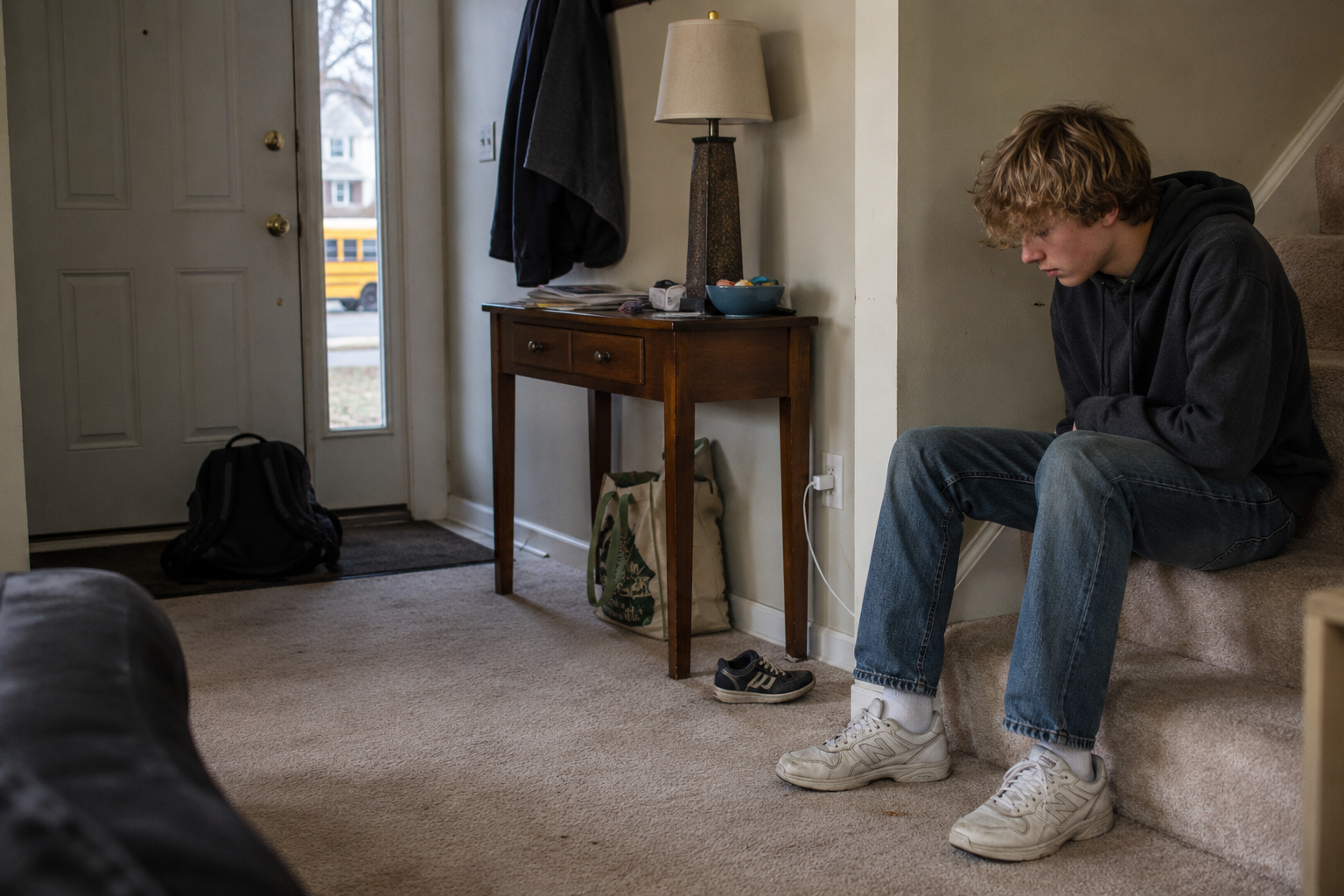
Most mornings start the same way: an argument, a stomachache that appears right before the bus, or a flat refusal to get out of bed. If your teenage son won’t go to school and it’s happening more than once or twice, this usually isn’t defiance for its own sake. It’s often a sign of anxiety, depression, bullying, or a learning struggle he doesn’t have words for yet. The behavior is the symptom, not the problem.
Key Takeaways
- School refusal is different from occasional skipping. It’s a pattern, and it usually has a cause underneath it.
- Anxiety is the single most common driver, followed by depression, undiagnosed learning issues, and social problems like bullying.
- Physical complaints (stomachaches, headaches) that show up before school and disappear on weekends are a real signal, not an excuse.
- Punishing the refusal without addressing the cause usually makes it worse.
- If refusal has lasted more than two weeks or is paired with isolation, hopelessness, or safety concerns, it’s time for a professional evaluation.
What Parents Are Seeing
- Physical complaints right before school that fade once he’s allowed to stay home
- Morning meltdowns, shutting down, or point-blank refusal to get dressed or leave the house
- Grades slipping alongside rising absences
- Avoidance that started after a specific event (a fight, a bad grade, a social incident)
- Reluctance that’s spreading beyond school, like avoiding practice or friends’ houses too
What May Be Underneath It
Anxiety This is the most common cause of school refusal in teenage boys. It can look like fear of a specific class or teacher, social anxiety about the cafeteria or hallways, or generalized dread with no single trigger he can name.
Depression A teen who’s depressed often stops seeing the point of school. Low energy, loss of interest, and a “why bother” attitude can look like laziness but usually isn’t.
Bullying or social conflict Boys are less likely to volunteer this than girls are. Watch for sudden friend group changes, phone anxiety, or refusal that’s specific to certain days or class periods.
Undiagnosed learning or attention issues When school feels impossible to keep up with, avoiding it can feel like the only escape. This is worth ruling out, especially if refusal started around a harder course load.
Family stress or a recent change A move, divorce, loss, or major disruption at home can show up first as school refusal.
When Should I Worry?
Occasional reluctance is normal. Worry when refusal is: happening several times a week, lasting more than two weeks, escalating despite consequences, or paired with isolation, declining hygiene, hopelessness, or talk of not wanting to be here. Those combinations call for a professional evaluation, not just a stricter morning routine.
What Should I Do Now
- Rule out a physical cause first with his pediatrician.
- Ask directly and without judgment: “What’s making school hard right now?” Expect a vague first answer. Stay curious, not accusatory.
- Talk to the school counselor about attendance patterns, class-specific triggers, and any social incidents on their radar.
- Get him back into school in small steps rather than an all-or-nothing return, if refusal has already gone on for a while.
- If the pattern doesn’t improve within two to three weeks, bring in a therapist who treats adolescent anxiety or school avoidance specifically.
When Professional Treatment May Be Appropriate
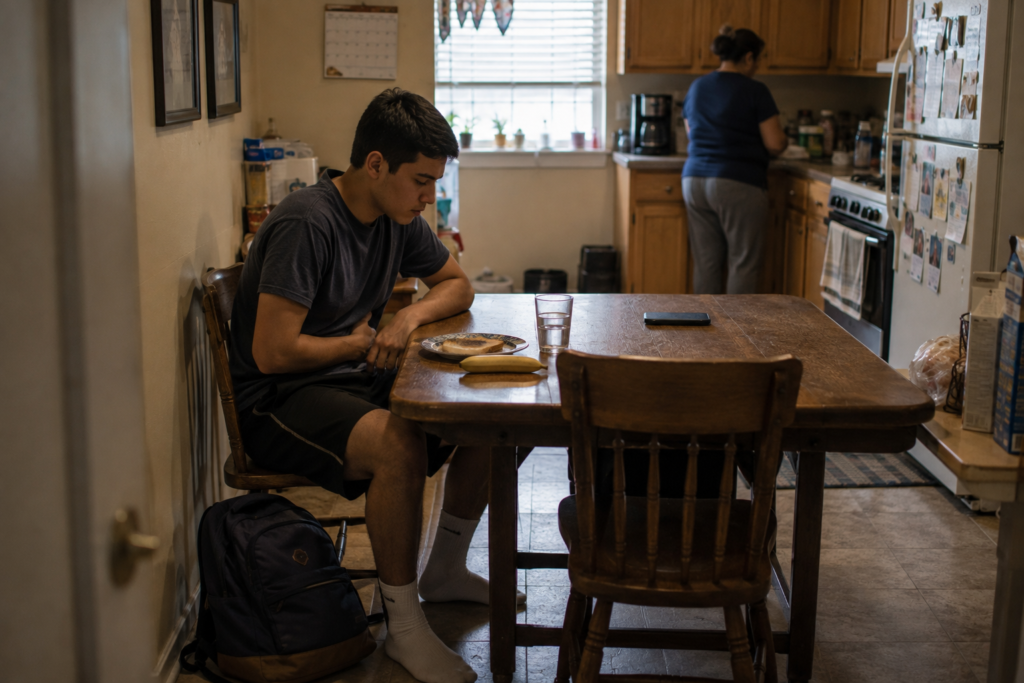
If school refusal is one part of a bigger picture, sustained anxiety or depression, safety concerns, family conflict that outpatient therapy hasn’t touched, or a home environment that can’t support daily de-escalation, a higher level of care may be the faster path back to a functioning routine. Residential treatment gives a teen room to work through the underlying cause away from the daily pressure that’s reinforcing the avoidance.

Expert Quote
“School refusal is rarely about school itself. By the time a parent is dealing with a child who won’t get out the door, we’re usually looking at anxiety, depression, or a social problem that’s built up over weeks or months. The behavior parents see in the morning is the release valve, not the source. The fastest way to fix it is to name what’s underneath it, not to negotiate harder about attendance.” – Dr. Nate Upshaw, MD, Medical Director, Braveminds Academy
Frequently Asked Questions
Is it normal for teenagers to occasionally not want to go to school?
Yes. Occasional reluctance is normal. A repeating pattern, especially with physical symptoms, is what warrants attention.
Can anxiety really cause physical symptoms like stomachaches?
Anxiety triggers real physical symptoms. They’re not faked and shouldn’t be treated as manipulation.
What if my son won't tell me why he doesn't want to go?
That’s common, especially with boys. Involve the school counselor and consider a therapist who can build trust over a few sessions rather than pushing for an answer in one conversation.
Should I force him to go to school every day?
Forcing attendance without addressing the cause usually increases resistance. A gradual, supported return works better than an ultimatum.
Could this be bullying even if he denies it?
Yes. Teenage boys under-report bullying. Changes in friend groups, phone behavior, or class-specific avoidance are worth asking the school about directly.
When does school refusal become a mental health emergency?
When it’s paired with talk of hopelessness, self-harm, or not wanting to be here. That requires immediate professional attention, not a school attendance plan.
How long should I try things on my own before getting help?
Two to three weeks of a consistent pattern without improvement is a reasonable point to bring in a therapist.
Related Resources for Parents
If your teenage son is struggling with anger, sudden behavioral changes, withdrawal, excessive screen use, or emotional regulation, these resources can help you better understand what may be happening and what steps to take next.
- My Son Is Angry All the Time: Anger, Defiance & ODD in Boys
- I Don’t Recognize My Teenager Anymore: What Parents Should Know
- My Son Changed Overnight: 12 Signs It Could Be More Than Mood Swings
- Gaming and Social Media Addiction in Teen Boys: Signs & Help
- Cognitive Behavioral Therapy (CBT) for Teen Boys
Trusted Mental Health Resources
The following organizations provide reliable, evidence-based information about school refusal, anxiety, adolescent mental health, and finding appropriate behavioral health support.
- Child Mind Institute: When Kids Refuse to Go to School — Guidance for parents on recognizing school refusal, understanding what may be driving it, and helping a child return to school.
- American Academy of Child & Adolescent Psychiatry (AACAP): School Refusal — Parent-focused clinical guidance on school refusal, anxiety, warning signs, and when to seek professional help.
- National Institute of Mental Health (NIMH): Child and Adolescent Mental Health — Evidence-based information on warning signs, common mental health conditions, treatment, and when parents should seek help.
- Substance Abuse and Mental Health Services Administration (SAMHSA): Find Help — Federal resources for families seeking mental health and substance use treatment, support, and crisis services.

Dr. W. Nate Upshaw is a psychiatrist with over 20 years of experience across inpatient psychiatry, VA hospitals, academic medicine, and private practice. A Tulane University School of Medicine graduate and former University of South Florida faculty member, he specializes in complex and treatment-resistant conditions, including PTSD, depression. He is also trained in advanced interventional treatments such as TMS, ECT, and Spravato®, and currently serves as Medical Director at Turnwell Mental Health of Charleston and Tampa Bay, focusing on personalized, high-precision psychiatric care.

