
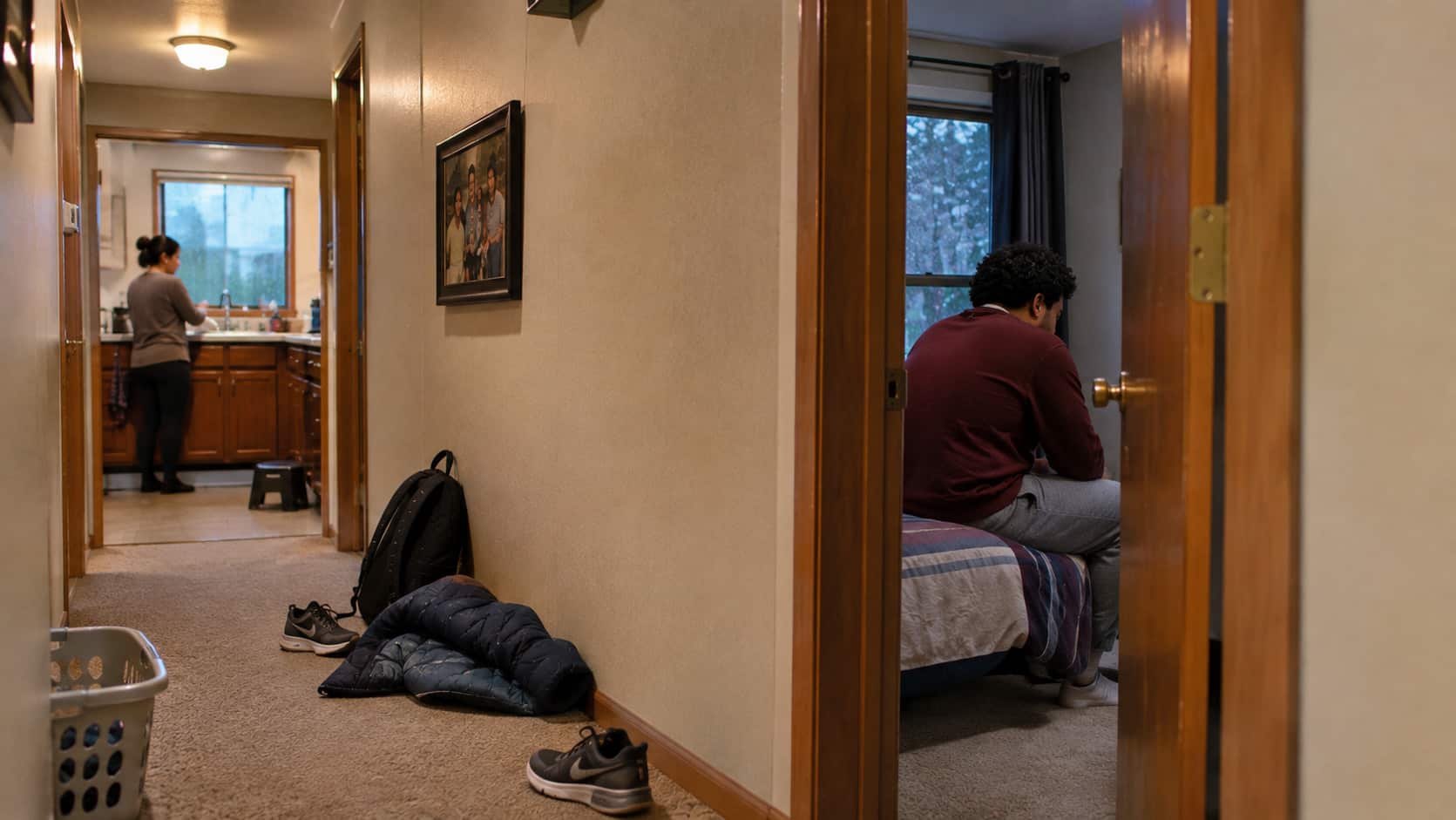
Emotional dysregulation in teenage boys means his emotions hit harder and faster than his ability to manage them. A small trigger, like a comment, a lost game, or a “no,” can set off an explosion or a complete shutdown, and it can take him a long time to calm down. It is usually not defiance or manipulation. It is a skills gap, often connected to anxiety, ADHD, trauma, or depression, and it responds well to calm, consistent support and the right treatment.
Key Takeaways
- Emotional dysregulation is a pattern of intense, fast-moving emotions that are hard to calm, not a character flaw.
- It often sits on top of another condition, such as anxiety, ADHD, trauma, or depression, so the underlying cause matters.
- The best time to teach a skill is when he is calm. The worst time is in the middle of an outburst.
- Validation does not mean agreeing with the behavior. It means showing him you understand the feeling.
- Aggression, threats, or self-harm are safety issues that need professional help right away.
What Parents Are Seeing
- Outbursts that seem far bigger than the trigger, followed by regret or exhaustion
- Going from fine to furious in seconds, or from upbeat to withdrawn within an hour
- Slamming doors, yelling, throwing things, or punching walls
- Shutting down, going silent, or leaving the room when stressed
- Difficulty calming down once upset, even after the situation has passed
- Conflict with siblings, teachers, or friends, and trouble keeping up at school
What May Be Underneath It
Anxiety
An anxious teen often feels under constant threat, so small stressors feel big. Irritability is a common way anxiety shows up in boys. Learn more about anxiety in teens.
ADHD
Teens with ADHD often struggle with impulse control and frustration tolerance, and they may be criticized more than their peers, which adds to the strain. Learn more about ADHD in teens.
Trauma or chronic stress
A teen who has been through trauma, loss, bullying, or a chaotic home may stay on high alert, and his nervous system can react as if danger is always close. Learn more about trauma and PTSD in teens.
Depression
In boys, depression often looks like irritability and anger, not sadness. If outbursts come with low energy, withdrawal, or changes in sleep, read Is My Teenage Son Depressed, or Just Going Through a Phase?
Sleep, substances, and screens
Too little sleep, alcohol or vaping, and heavy late-night screen use can all make emotions harder to manage. They are worth ruling out, though they rarely explain everything alone.
Still developing skills
The teenage brain is still building the systems that manage emotion and impulse. Some boys simply have not been taught or have not yet practiced the skills to cope with strong feelings. The goal is to build them, not to punish the absence of them.
 When Should I Worry?
Occasional blowups are normal in adolescence. Look for a pattern that is serious in one of these ways:
- How often and how intense: outbursts several times a week, or ones that feel out of control
- How long: it has lasted more than a few weeks, or it is getting worse
- What it costs him: trouble at school, lost friendships, or constant conflict at home
- Safety: physical aggression, damage to property, threats, or talk of hurting himself or anyone else
If there is a threat to his safety or anyone else’s, call or text 988, or call 911 in an emergency. For talk of death or not wanting to be here, read My Teenager Says He Doesn’t Want to Live. What Do I Do?
What Should I Do Now?
- Wait for calm before you talk. Nobody learns in the middle of a storm. Keep your voice low, say little, and make sure everyone is safe. Return to the conversation once he has settled, usually later that day.
- Validate first, then problem-solve. Try: “That sounded really frustrating. I get why you were so upset. Let’s figure out a better way to handle it next time.” Validation shows him he is understood without approving the behavior.
- Track the pattern for two weeks. Note what happened before, what he did, and what happened after. Look for triggers such as homework, transitions, hunger, lack of sleep, or specific people.
- Practice one skill when he is calm. Pick something simple, such as slow breathing, taking a walk, naming the feeling out loud, or an agreed signal for “I need a break.” Practice it when things are quiet so he can use it when they are not.
- Get an evaluation. Start with his pediatrician, and ask for a referral to a therapist who works with teens and uses skills-based approaches such as dialectical behavior therapy (DBT) or cognitive behavioral therapy (CBT). Ask them to screen for anxiety, ADHD, and depression.
When Professional Treatment May Be Appropriate
Skills-based outpatient therapy helps many teens. A higher level of care may be worth considering when outbursts involve physical aggression or safety concerns, when school and home life have broken down, when outpatient therapy has not been enough, or when another condition, such as trauma or substance use, is part of the picture. At that point, daily structure and closer clinical support can make the difference.
Braveminds Academy’s program for emotional dysregulation is residential and typically runs 30 to 90 days, individualized after a clinical assessment. It includes DBT and CBT, individual therapy three to five times per week, group and family therapy, and 24/7 supervision. See how emotional dysregulation is treated or learn about the residential treatment program.


Dr. W. Nate Upshaw is a psychiatrist with over 20 years of experience across inpatient psychiatry, VA hospitals, academic medicine, and private practice. A Tulane University School of Medicine graduate and former University of South Florida faculty member, he specializes in complex and treatment-resistant conditions, including PTSD, depression. He is also trained in advanced interventional treatments such as TMS, ECT, and Spravato®, and currently serves as Medical Director at Braveminds Academy as well as Turnwell Mental Health of Charleston and Tampa Bay, focusing on personalized, high-precision psychiatric care.